Interactive Kiosks: The Future of Customer Service is Here - How Self-Service Tech is Transforming Retail, Healthcare & Hospitality
Interactive kiosks are revolutionizing customer engagement and service delivery across industries. As businesses strive to enhance customer experience, reduce wait times, and improve operational efficiency, these self-service terminals have become indispensable tools.
What Are Interactive Kiosks?
Interactive kiosks are self-service terminals that allow users to access information, conduct transactions, and engage with services without human assistance. Equipped with touchscreens, payment processing capabilities, and tailored software applications, they serve various functions including ticketing, wayfinding, product information, and order placement.
Key Growth Drivers
Rising Demand for Self-Service Solutions
Consumers increasingly prefer quick and convenient access to services. Interactive kiosks reduce the need for staff intervention, allowing businesses to serve more customers efficiently. This trend is particularly strong in retail and fast food industries where speed of service is critical.
Technological Advancements
Innovations in touchscreens, mobile payments, and cloud computing are enhancing kiosk functionality. Modern kiosks can integrate with mobile apps for personalized experiences, while artificial intelligence (AI) and machine learning enable tailored recommendations based on user behavior.
Enhanced Customer Experience Focus
Businesses recognize that exceptional customer experiences drive loyalty. Interactive kiosks provide seamless interaction, reducing wait times and improving satisfaction. In hospitality, for example, kiosks streamline check-in processes so guests can access rooms more quickly.
Cost-Effectiveness
Investing in interactive kiosks leads to significant cost savings by automating routine tasks. Companies can reduce labor costs and reallocate staff to more complex customer service roles.
Key Applications Across Industries
Retail
Kiosks are used for product information, price checking, and self-checkout, enhancing shopping experiences and increasing sales.
Healthcare
Hospitals and clinics utilize kiosks for patient check-in, appointment scheduling, and service information, improving operational efficiency and patient satisfaction.
Transportation
Airports and train stations employ kiosks for ticketing, boarding pass printing, and wayfinding, streamlining travel experiences.
Hospitality
Hotels use kiosks for check-in/check-out processes, allowing guests to bypass long lines and access services conveniently.
Challenges to Consider
Despite promising growth, the interactive kiosk market faces several challenges:
- Security Concerns: Kiosks handle sensitive customer data and payment information, requiring robust security measures and data protection protocols.
- Maintenance and Support: Regular maintenance and technical support are essential to keep kiosks functioning optimally and avoid downtime.
- User Acceptance: While many consumers embrace self-service technologies, some prefer human interaction. Businesses must balance automation with personal service.
Future Outlook
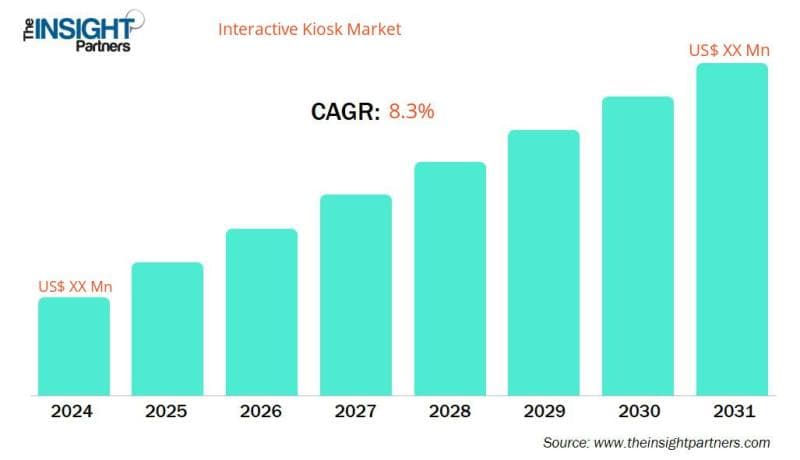
The Interactive Kiosk Market is expected to register a CAGR of 8.3% from 2025 to 2031, with market size expanding significantly. Key growth factors include increasing adoption in emerging markets, technological advancements, and growing emphasis on enhancing customer experiences.
As businesses innovate and adapt to changing consumer behaviors, interactive kiosks will play a crucial role in shaping the future of customer engagement. Companies investing in advanced kiosk solutions and prioritizing user experience will be well-positioned to thrive in this dynamic market.
- #kiosks
- #selfservice
- #customerexperience
- #automation
- #retailtech
Comments · 0